

Everyone Knows Building Chip Fabs Is Hard. It’s Even Harder Than You Think

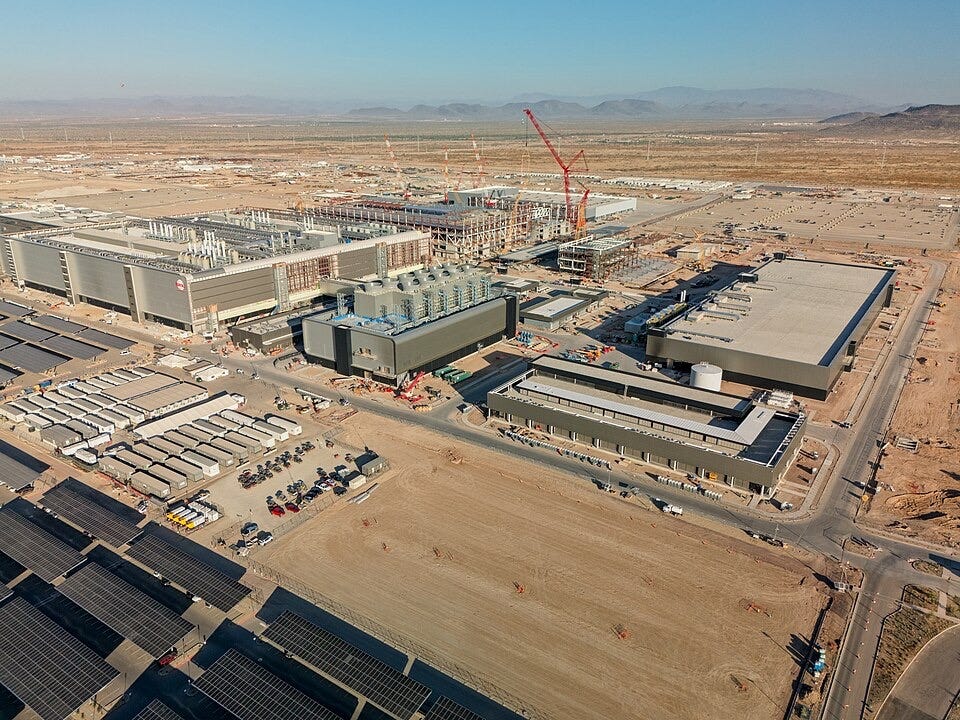
Earlier this year, Taiwan Semiconductor Manufacturing Company’s (TSMC) Arizona facility entered high-volume production of advanced 4-nanometer chips. For the first time in decades, leading-edge semiconductors are being manufactured on American soil at scale. The headlines understandably focus on the milestone itself: billions of dollars invested, production lines activated, a visible sign that America is reclaiming a portion of the semiconductor value chain it once dominated.
But what has actually been accomplished deserves to be understood in far grander terms. Recreating the capability of manufacturing advanced chips is not simply a matter of monetary investment—$165 billion planned so far. The real challenge lies in the complexity of what must be rebuilt. It is a national-scale engineering undertaking—closer in spirit to the industrial mobilizations that built the first nuclear reactors or sent astronauts to the Moon. Families across America were not glued to their televisions as the first silicon wafers emerged from the production line. Yet in technological terms, this achievement is no less impressive.
A detailed technical analysis from Anastasi In Tech helps to illuminate the scale of the challenges being overcome. On paper, the strategy seemed straightforward: replicate one of TSMC’s advanced fabs from Taiwan in Arizona. Use the same machines. Follow the same process. Apply the same manufacturing discipline. But semiconductor production at 4 nanometers is not a matter of simply duplicating blueprints. It requires harmonizing thousands of tightly calibrated variables within a very specific industrial environment. When that environment changes—from Taiwan to Southwestern United States—every one of those variables must be reconsidered. Water chemistry shifts. Air composition differs. Power reliability fluctuates. Supplier networks stretch across oceans. Workforce experience is thinner. Even geological conditions beneath the facility affect vibration and calibration. To appreciate the scale of this achievement, consider a few of the obstacles (outlined below) TSMC had to overcome in Arizona.
Tools and Integration
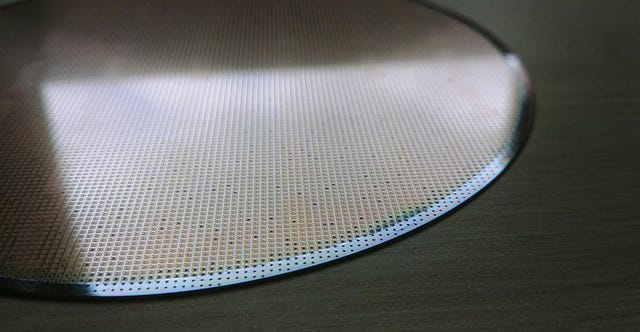
Modern chip production requires a silicon wafer to pass through 3,000–4,000 manufacturing steps over two to three months, gradually building 80–100 microscopic layers that form the finished device (ASML, October 4, 2023). By the time a wafer nears completion it can be worth tens of thousands of dollars, but even one small mistake during any of those steps can destroy months of work. Initially, however, such errors are common. It takes months of experimentation and adjustments involving a vast array of sophisticated machines worth billions of dollars before production becomes reliable
Water in the Desert
But constructing the facility and installing the machines was only the first step. A modern semiconductor fab consumes millions of gallons of water per day, and not ordinary municipal water. Chip manufacturing requires ultra-pure water filtered to extraordinary levels of cleanliness, because even microscopic contaminants can ruin wafers. This meant that TSMC had to build what is effectively a second factory inside the factory designed for Arizona’s water (which is chemically different from Taiwan’s): a massive water treatment and recycling facility designed to purify local water to exceedingly high standards. That achievement alone would qualify as a major industrial project. And it was only one of several formidable challenges.
The Chemical and Materials Network
Producing advanced chips requires far more than exceptionally clean water and the completion of thousands of microscopic manufacturing steps. It also depends on a steady supply of highly refined chemicals and specialty gases that clean wafers and enable the microscopic patterns that form a chip’s circuitry. Just as with water, these materials must be delivered at extraordinary levels of purity. But the problem is that the United States currently lacks Taiwan’s dense network of chemical manufacturers. Sunlit Chemical, a major Taiwanese producer of such inputs, recently opened a plant in the Phoenix area. That’s a step in the right direction. To truly restore advanced chip production in America, however, a whole other industry needs to be rebuilt too: the materials and chemicals manufacturers that support it.
People and Institutional Memory
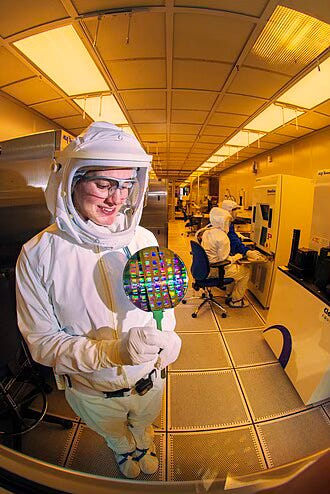
Even with the right machines, water, and materials, advanced chip manufacturing ultimately depends on people. Running a modern fab requires engineers and technicians who understand how thousands of tightly linked manufacturing steps interact and who can diagnose problems when machines drift out of calibration, chemical processes behave unexpectedly, or yields suddenly fall. Taiwan’s semiconductor industry has built this expertise over decades. This was perhaps the hardest hurdle to overcome. To bring the plant online, TSMC transferred engineers from Taiwan, partnered with universities, and launched extensive training programs to begin building a local workforce. Those efforts have allowed the Arizona facility to reach production. But Taiwan still possesses a far deeper bench of experienced semiconductor talent, and closing that gap will require years of sustained effort
These examples only scratch the surface. What TSMC has built in Arizona is not simply a factory—it is the early reconstruction of one of the most complex industrial ecosystems ever created. . Taiwan’s semiconductor ecosystem took decades to assemble. Recreating even a portion of it in the Arizona desert is therefore an extraordinary achievement for American manufacturing.
At the same time, the project underscores how far the United States still has to go. Reclaiming a leading position in advanced chip manufacturing will require sustained investment, a growing network of suppliers, and a much larger pool of skilled engineers and technicians. The Arizona plant proves that rebuilding this capability is possible. It also makes clear that the work has only just begun.
Sincerely,
Guy Barnett
Pure Source
TSMC is not sponsoring this newsletter. If you’d like to support PureSource, take a look at the Made in USA and Made in Taiwan products below. Taiwan is one of America’s most important allies, and we hope you’ll find something you love from the places you want.






This content is reader-supported. As an Amazon Associate, PureSource earns from qualifying purchases.