

America’s Pharma Comeback Isn’t Where You Think

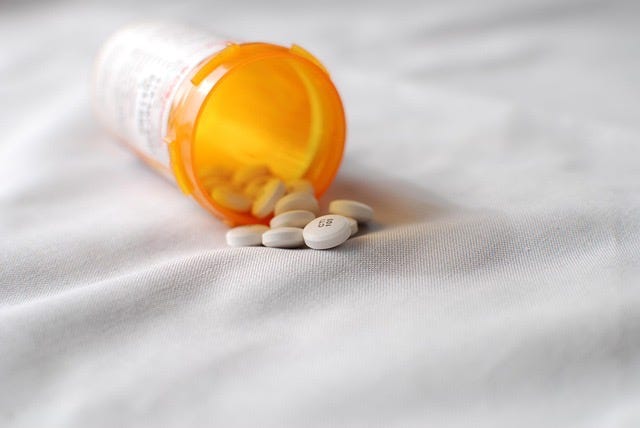
In just the past year, a series of major pharmaceutical investments have been announced: Eli Lilly and Company committed $1.2 billion to expand a key manufacturing facility, and Amgen followed with a $650 million expansion of its biologics operations (BioSpace, February 3, 2026). Now PharmaEssentia has revealed plans for a new $46 million production site. These are just a few notable examples of an important trend. Pharmaceutical companies are making serious, strategic bets on domestic medical and drug manufacturing—but you’ll never guess where.
Puerto Rico.
These investments—spanning legacy pharmaceutical giants and newer biotech players—are part of a broader wave of American reshoring. This is not just “assembled in the USA” to avoid some tariffs; this is advanced manufacturing in one of the most strategic and technologically sophisticated industries in the world. From biologics to complex drug production, companies are bringing manufacturing capacity back to the United States.
Puerto Rico’s pharmaceutical sector supports more than 100,000 jobs. These are largely high-skill well-paid roles tied to advanced biologics, sterile injectables, and complex drug production. The scale is equally striking on the output side: pharmaceutical manufacturing accounts for a massive share of the island’s economy and exports, with tens of billions of dollars in medicines produced each year. Puerto Rico already produces roughly 10% of all drugs consumed in the United States—a share that is growing as new investment comes online—and accounts for a significant share of total U.S. pharmaceutical exports.
It wasn’t always this way. Puerto Rico—like the rest of America—experienced a prolonged manufacturing decline over the past few decades, as plant closures, job losses, and reduced investment followed an increase in taxes and a broader shift of production offshore.
This erosion was driven by a combination of policies: subsidies, increasingly stringent environmental and other regulations, permitting and legal barriers, constrained access to materials, and high energy costs (also due to regulatory burdens). Puerto Rico’s experience was not unique, but was part of the broader hollowing out of American industry. Across the United States, more than 70,000 manufacturing plants shut down between 1997 and 2022—an average of roughly eight factories closing every single day—and Puerto Rico was part of that same industrial contraction.
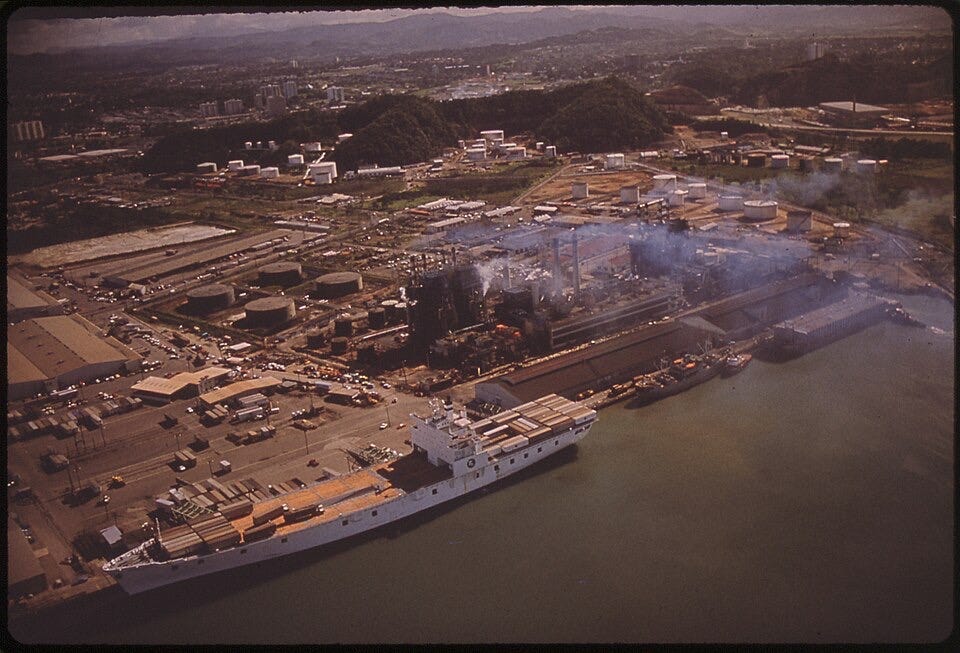
In recent years, the trend in Puerto Rico has started to reverse. After decades of decline, pharmaceutical manufacturing investment is flowing back to the island. Here’s a brief overview of why manufacturers are choosing Puerto Rico again—and what the rest of the country can learn from this:
Streamlining the Path to Build and Operate
Puerto Rico has undergone a fundamental mindset shift. For years, industry was treated with suspicion—if not outright hostility—with policies that made it harder, slower, and more expensive to build and operate factories. Naturally, businesses chose to invest in other places. Today, the approach is different. Instead of putting up barriers, the question has become: what can we do to help you build here? How can we make this faster, simpler, less costly, and more predictable?
That shift is most visible in how projects get approved. Puerto Rico has moved away from fragmented, bureaucratic processes toward centralized, digital permitting systems where companies can submit and track applications in one place. Agencies are better coordinated, with reviews happening in parallel rather than sequentially, cutting down timelines for construction, environmental approvals, and operational licensing. Organizations like Invest Puerto Rico even help companies navigate requirements and coordinate with government agencies (Invest Puerto Rico).
The result is a faster, less expensive, more predictable path to building and operating, with a far more welcoming, business-friendly environment. That is what companies look for when deciding where to invest.
Lowering the Cost of Doing Business
In 2019, the passage of Act 60 introduced a competitive tax structure for manufacturers in Puerto Rico—most notably a fixed corporate tax rate of around 4% on eligible manufacturing income.
That compares to a 21% federal corporate tax rate in the United States, before even factoring in additional state and local taxes that can push the total burden significantly higher. For years, manufacturers didn’t just drift overseas—they were pushed out by higher costs. By lowering taxes again, Puerto Rico is competing on a much more even playing field with the same countries that drew production away in the first place.
A Dense Pharmaceutical Ecosystem
One of Puerto Rico’s biggest advantages is that the industry is already there. Decades of pharmaceutical manufacturing have created a dense ecosystem of major companies, specialized suppliers, and a highly skilled and experienced workforce.
As we argued in Wheel be Back: Guardian and the Reshoring Ride, the manufacturing ecosystem itself is self-reinforcing—every investment, every upgrade, every newly trained worker strengthens the whole.
For manufacturers, that matters. Expanding in Puerto Rico means access to engineers, technicians, and operators who already know how to run complex biologics and drug manufacturing processes. It also means existing relationships with contractors, equipment providers, and logistics networks that support these facilities. The result is that new plants can plug into an established system and scale much faster.
It’s important to acknowledge that even with such advantages, Puerto Rico still has challenges to overcome. Power reliability remains a concern, with outages and high electricity costs caused by legal constraints that make it difficult and expensive to build new generation capacity. America’s anemic shipbuilding industry also increases the cost and complexity of moving goods to and from the island. And beyond that, there are still countless other regulatory barriers that make it harder for Puerto Rican firms—and American manufacturers more broadly—to compete with lower-cost imports.
But what’s happening in Puerto Rico is a step in the right direction and is worth celebrating. After decades of decline, manufacturing is starting to come back. If Puerto Rican policymakers continue to move in this direction, the progress we’re seeing today will only accelerate.
There’s a lesson here—not just for mainland United States, but for the West more broadly. Industry will not return on its own. It goes where it is welcomed, where it can operate efficiently, and where long-term investment makes sense. Puerto Rico’s resurgence shows that when policy reduces friction, lowers costs, and supports (rather than penalizing) industries, companies respond. If the goal is to rebuild domestic manufacturing capacity—whether in pharmaceuticals or beyond—the path forward is clear. The question is whether the rest of America will follow.
Sincerely,
Guy Barnett
PureSource
P.S. As usual, none of the companies mentioned above are sponsoring this newsletter. If you wish to support the work we’re doing at PureSource, feel free to check out these U.S.-made health and wellness products:

This content is reader-supported. As an Amazon Associate, PureSource earns from qualifying purchases.