

American Reindustrialization: Lessons from Ukraine’s Drone Revolution

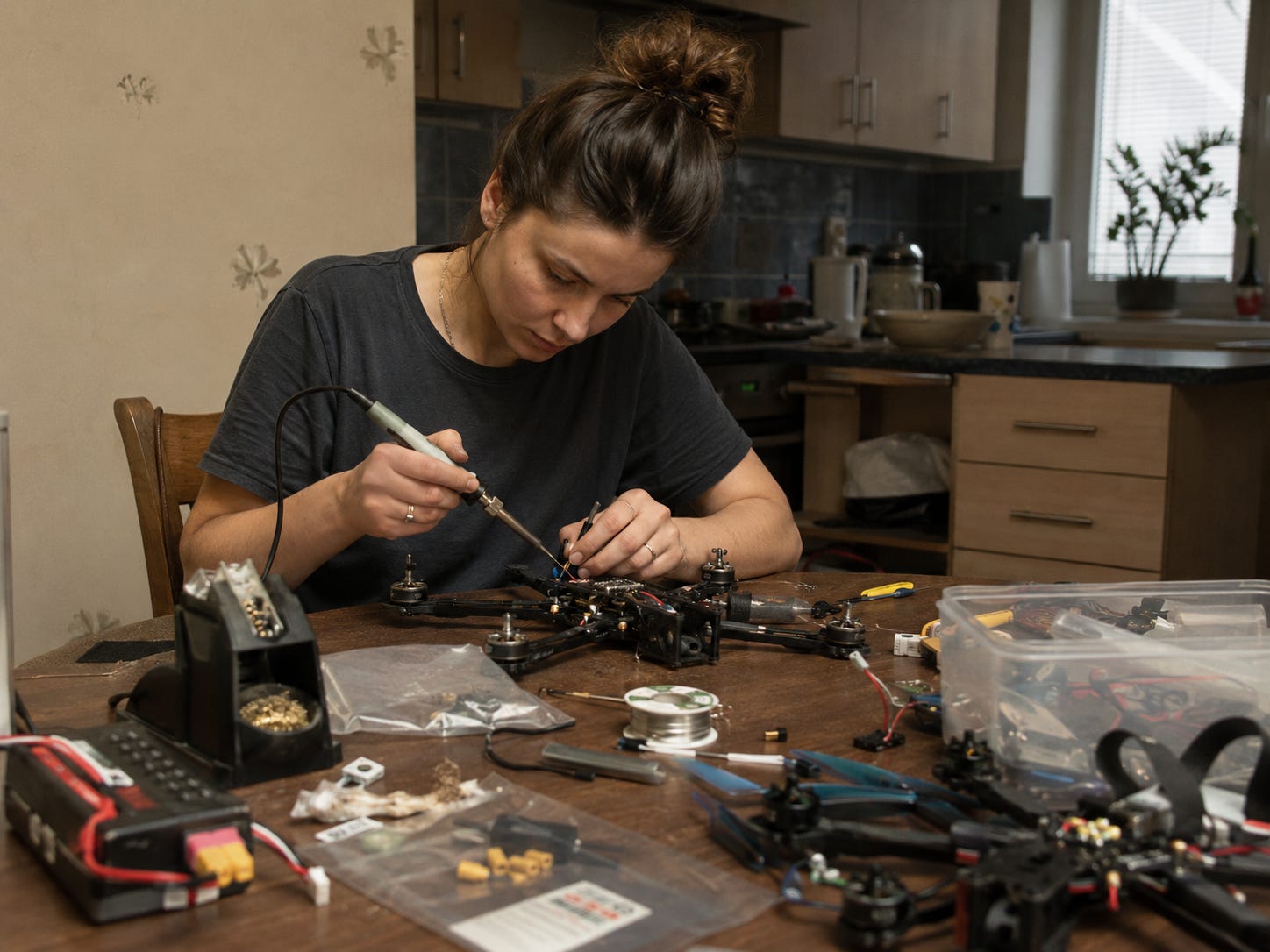
In Kyiv, a former award-winning florist, Kseniia Kalmus, now helps build drones for Ukrainian troops. Her tables used to overflow with flowers and vases; now they are covered with carbon frames, wiring, batteries, soldering tools, and drone parts. In another part of Ukraine, a jeweler named Violetta Oliinyk took the delicate hand skills she once used for metalwork and stones and now applies them to drone assembly. These women are not unusual. Across Ukraine, in response to Russia’s full-scale invasion in February 2022, drones are being assembled in homes, garages, basements, workshops, small businesses, and factories. Ordinary citizens, engineers, soldiers, startups, and manufacturers have all become part of the same urgent national project: producing the weapons Ukraine needs to survive.
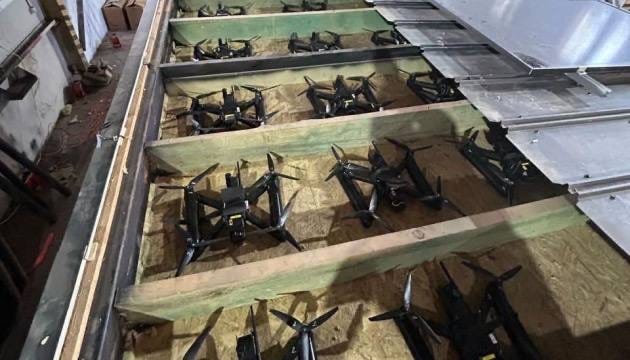
The scale of that effort is hard to overstate. Before Russia’s invasion, Ukraine only had seven drone manufacturers, but by 2025, it had 1,500. Drone output exploded: Ukraine produced more than 4 million drones in 2025 and aims to produce more than 7 million in 2026 (Aviation Week, April 21, 2026). What began as emergency improvisation has become one of the fastest military-industrial expansions in modern history. For the United States and its allies, the obvious question is how Ukraine made that happen—and what it teaches us about how to rebuild our own industrial capacity.
Doesn’t it normally take years to open a factory, enter the military supply chain, obtain government approvals, and begin producing equipment for soldiers? What about permits, licenses, business certifications, regulatory paperwork, and NIMBY challenges? Is it really legal for people like Kseniia, Violetta, and countless others to build drones in kitchens, basements, and garages—or for new companies to start making military equipment almost overnight?
The answer to all of these questions is that Ukraine faces an existential threat, which has left it with no choice but to enable individuals and businesses to move with extraordinary speed. The country cannot afford the normal bureaucratic processes that take years. Rules that delay production by even a single day—let alone years—are no longer treated as harmless paperwork. Every needless delay has a human cost: fathers, mothers, brothers, and sons exposed on the front without the critical equipment they need to stay alive. In the face of those costs, regulations were reduced, red tape was cut, approval processes were shortened and simplified, and legal barriers that slowed production were removed (CSIS, July 18, 2025).
After seeing how quickly deregulation helped drone production expand, Ukraine applied the same principle to the most sensitive part of the system: ammunition, warheads, and explosive combat components. The first major step came in July 2023, when the Ukrainian government simplified the process for producing, procuring, and supplying ammunition for unmanned systems. The following year, that simplified procedure was expanded to ammunition more broadly.
What used to take years can now move in weeks or months. Safety inspections and other government oversight still occur, but instead of allowing approvals to drag on indefinitely, the new rules impose specific deadlines. Ordnance storage inspections, for example, must take place within five working days, and the certificate decision must be made within five working days after inspection (Ukrainian Cabinet Resolution No. 902, July 16, 2025). The point is not that Ukraine eliminated government oversight or abandoned rules. It is that the system fundamentally changed its priorities. Rather than treating manufacturing as a problem to be managed, government policy shifted toward a different goal: producing as much critical, life-saving equipment as possible, as quickly as possible. Instead of asking how production could be regulated, delayed, or restricted, policymakers asked how it could be accelerated without compromising safety and security. Instead of asking how much regulation should be imposed, they asked how little regulation was actually necessary. Instead of asking how much red tape manufacturers could tolerate, they asked how much red tape could be removed?
There are many important lessons to learn from the war in Ukraine. Western experts study how cheap drones change the battlefield, how new tactics are emerging, how electronic warfare and counter-drone systems are evolving, etc. (see examples here and here). Learning from these real-world experiences is critical. But the deeper lesson of how a drone revolution occurred in the first place has been largely ignored. Instead, if government policy is discussed at all, the same tired proposals are typically trotted out: subsidies, tariffs, and Made-in-USA requirements.
But the meteoric rise of Ukraine’s drone sector did not come from a carefully targeted subsidy, protectionist trade rules, or a Made-in-Ukraine requirement. No, Ukraine’s drone revolution was driven by removing the legal and bureaucratic barriers that stood in the way of production.
That lesson could not be more urgent for the United States and its allies. Warnings that the West’s industrial base has been hollowed out and can no longer produce the ships, drones, missiles, interceptors, planes, and other equipment needed for a major war are near constant (see examples here and here). And those warnings have become even louder after recent fighting in Iran, when the United States and its allies expended large quantities of ordnance that will take years to replace.
As we covered in Do Americans Really Want Factories?, most Americans say they support solving that problem with more factories, more mines, more refineries, and more U.S.-made goods. But too often, the moment someone tries to build them, the legal and regulatory system stands in the way.
Ukraine shows what happens when those barriers are lowered. Its drone industry did not flourish simply because Ukrainians are brave or inventive, though they are. It flourished because the country made room for bravery and invention to become production. If America and its allies are serious about reindustrialization, they should start there. Not with another slogan. Not with another subsidy. Not with another tariff or domestic-content rule layered on top of the same broken system. Start by reversing policies that make it hard, expensive, and time-consuming for people to build.
Sincerely,
Guy Barnett
PureSource
This newsletter is not sponsored. To support PureSource and the work we do, have a look at the U.S.- and allied-made electronics and electrical products below. As always, our goal is to help you find the products that you love from the places you want.







This content is reader-supported. As an Amazon Associate, PureSource earns from qualifying purchases.